energies · 20
Energies
Twenty phases of inner experience, mapped with the same care as the 118 next door . A spiral, not a staircase. You move forward, back, and both at once.
Listen (read by Mira)

Geometry · Phenomenology · Myth
Every phase, three perspectives.
When we speak of inner phenomena we often mix three languages that make different claims to truth. This site separates them cleanly. Choose one, read how it speaks.
I · Structure
Geometry · what is measurable.
The natural-science layer. What shows up in brain scanners, EEG, heart-rate variability, controlled studies. Predictive Coding, Default Mode Network, quantum biology. Here the rule is: hypothesis, method, replication. We claim only what we can substantiate.
II · Flow
Phenomenology · how it feels.
The experience layer. How grief feels in the chest, where anger sits in the body, what changes after meditation. First-person data. Husserl, Merleau-Ponty, contemplative traditions. Here the rule is: precise description of the immediately given. Subjective, but not arbitrary.
III · Breadth
Myth · how tradition speaks.
The cultural meaning layer. How 5,000 years of wisdom traditions have drawn the same territory: chakras, Wu Xing, Sephiroth, archetypes. Image and symbol, not proof. Here the rule is: cite with humility, never sell as explanation. Myth is condensation, not mechanism.
 Sphere A · Values & Stages
Phases I to IV trace the inner scaffolding: where am I on the spiral, who narrates world to me, which five elemental feelings rise, which three filters sieve. The values-scaffold, before we feel it. Begin without haste.
- I
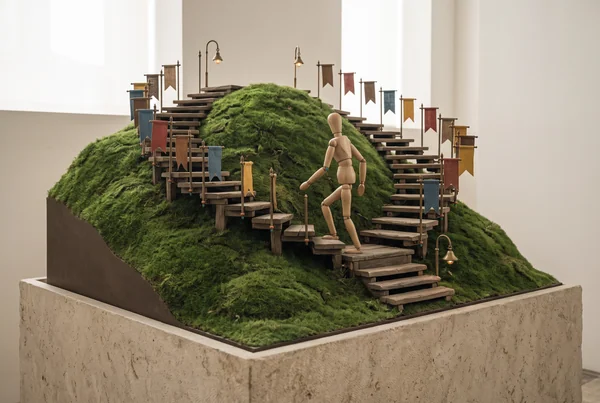 What if what you take for your values is a developmental stage? Mendeleev ordered atoms by weight and found a pattern. Clare Graves ordered values by complexity and found eight. Not types, stages.
 - II
 When you do nothing, your brain does the most. DNA is the outer helix of your form. The Default Mode Network is the inner helix of your self.
 - III
 Five feeling-types for the one element human. One day, five weather systems: outward push one moment, nothing but flow an hour later. Not personalities: states you wander through daily, in a shifting mixture every hour.
 - IV
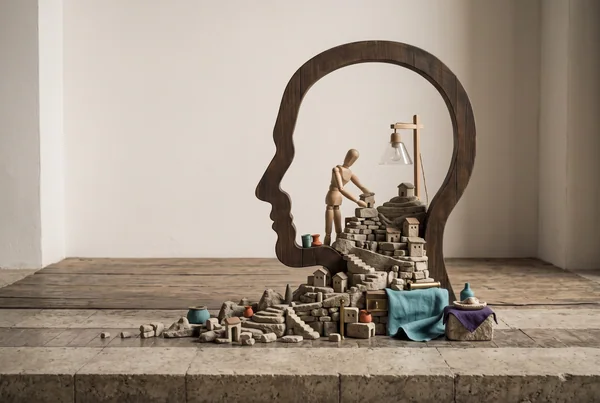 Your brain builds the world. Not the other way around. Your sensory system takes in roughly 11 million bits per second. Arriving consciously: about 50. What happens to the rest is decided by three devices inside you. And none of them asks you first.
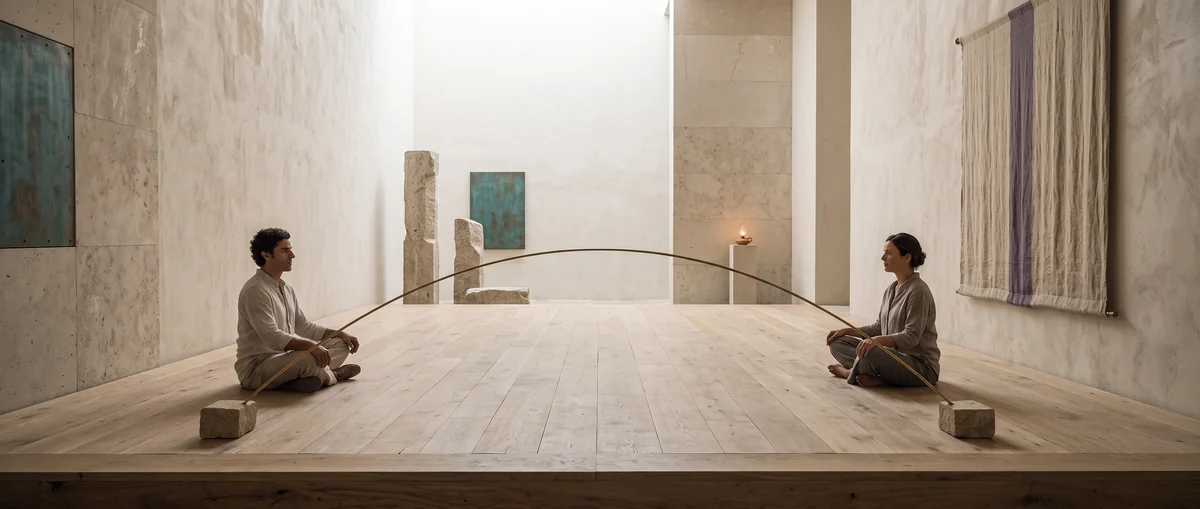
 Sphere B · Body & Field
Sphere A asked: where am I on the spiral. Sphere B asks: how do I feel that. From the concept of values to bodily experience. Five phases, continuous.
- V
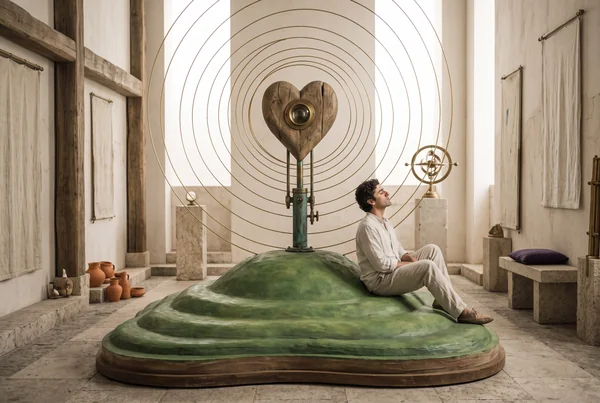 Your heart is not a pump. It has 40,000 neurons of its own, sends more signals to the brain than the other way round, and generates the strongest electromagnetic field in your body. And when you practice, it breathes in coherence with you.
 - VI
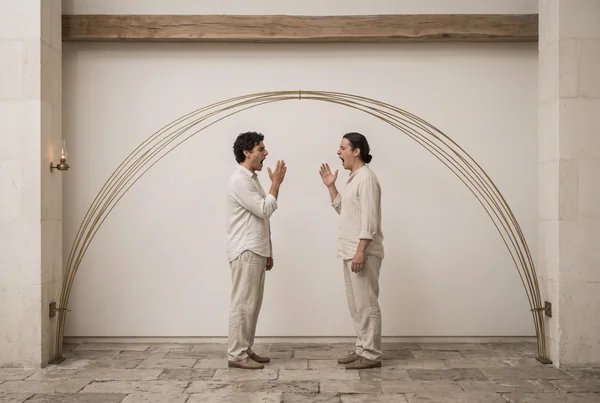 You yawn when he yawns. That is research, not courtesy. In your premotor cortex, neurons fire *not only* when you act, but also when you *see* someone else act. You live their inside inside your own.
 - VII
 Six virtues, across cultures. Peterson & Seligman combed through the great value traditions: from Aristotle to Confucius, from Buddhism to the Bible. And everywhere they found the same thing: six families. Always the same six.
 - VIII
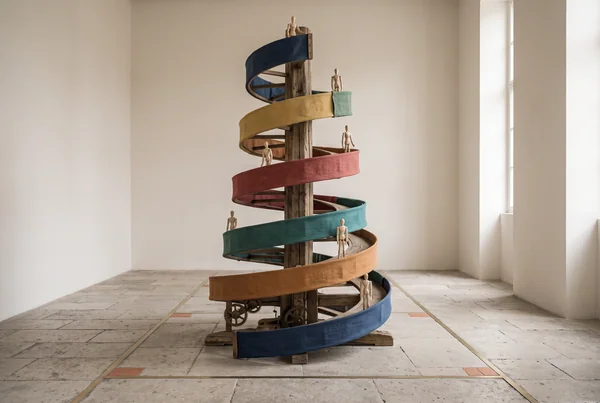 The eight vMemes are not a diagram. You walk them: sometimes forward, sometimes backward, often in several domains of life at once. And you return, but never to the same spot: one coil higher. Not a staircase. A spiral.
 - IX
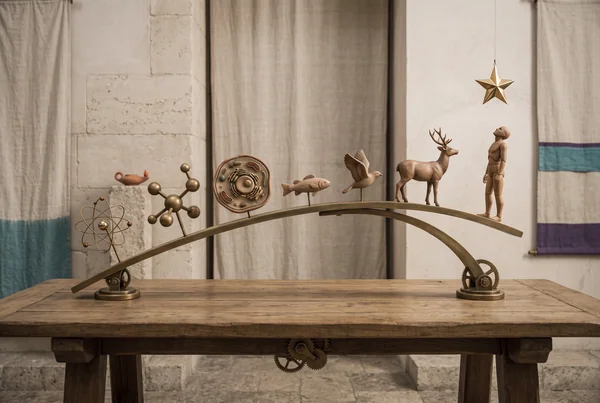 From atom to self: in 13.8 billion years. You are reading this sentence. And noticing that you are reading it. That noticing is the youngest layer of 13.8 billion years. Consciousness did not appear all at once; it emerged layer by layer.
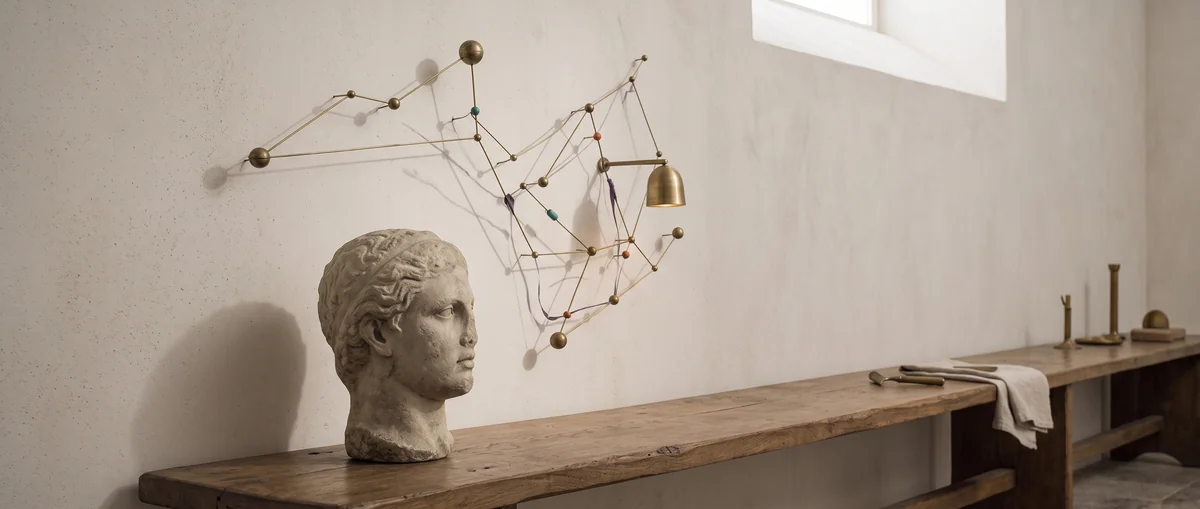
 Sphere C · Mind & Pattern
Sphere B taught you to read the body as a measuring instrument: heart coherence, mirror neurons, six virtue families. Sphere C now asks: which fine structures decide what the instrument can register at all? From the what of bodily experience to the how of its emergence: four phases framing the window, the quantum and the emotion-clusters.
- X
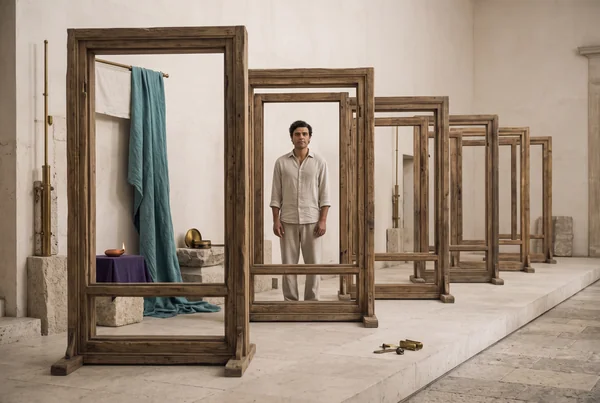 There is a window you are inside of. Sometimes you tip upward: anger, panic, hyperactivity. Sometimes downward: numbness, freeze. And sometimes, in between, you are simply there: accessible, present, able to learn. Dan Siegel gave that in-between a name. The Window of Tolerance.
 - XI
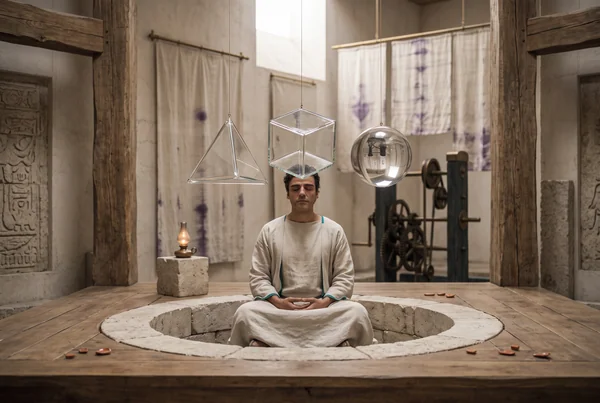 If consciousness were geometry, where would the geometry be? Penrose and Hameroff proposed a place: the microtubules of your neurons, where quantum coherence might hold for ~25 milliseconds. A *hypothesis*. Not a finding. But one that refuses to shrink the question.
 - XII
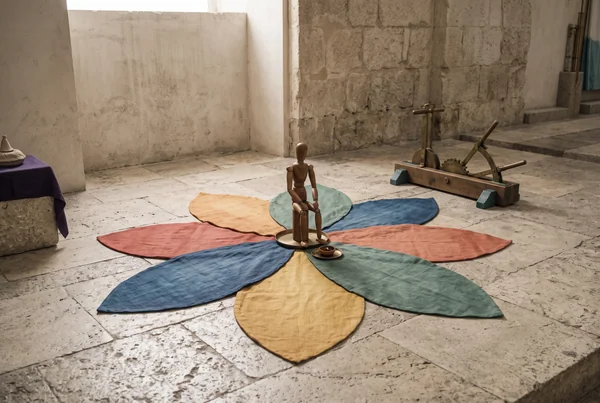 Eight base emotions. Built from these: everything you feel. What are the atoms of emotion? Plutchik asked. And answered: four opposing pairs, blendable like colours on a wheel. Forty years later, Cowen & Keltner (2017) had 853 participants rate 2,185 emotion-laden videos. The wheel held.
 - XIII
 You have a map of yourself, and it is not the territory. Describe yourself in three sentences. What you get is a map: as constructed as the periodic table, and just as useful. It's just that it has never been identical to what is actually there.
 - XIV
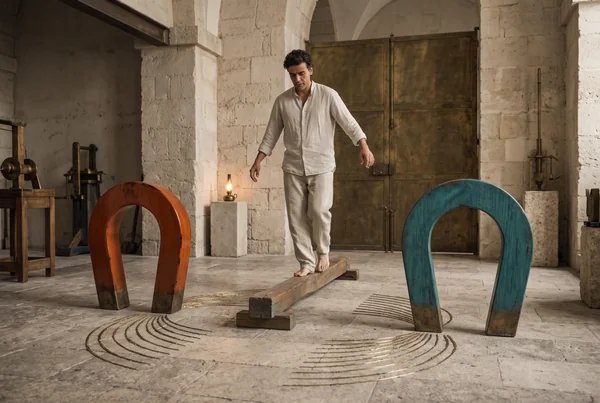 Ego is not bad. It is one pole. Sufis call the poles *nafs* and *rūḥ*, Thomas Merton *False* and *True Self*, C.G. Jung *ego* and *Self*. The same polarity, everywhere. The ego is not the flaw in it. It is one of the poles. The axis is the movement between them.
 Sphere D · Depth & Integration
Sphere C showed you the architecture: window, quantum hypothesis, 27 emotion clusters, your inner map as map. Sphere D asks after the edges of that architecture: where your field meets the field of others, where the shadow returns, where consciousness no longer seems merely local. Four phases that lead into the completion of the Inner Mandala.
- XV
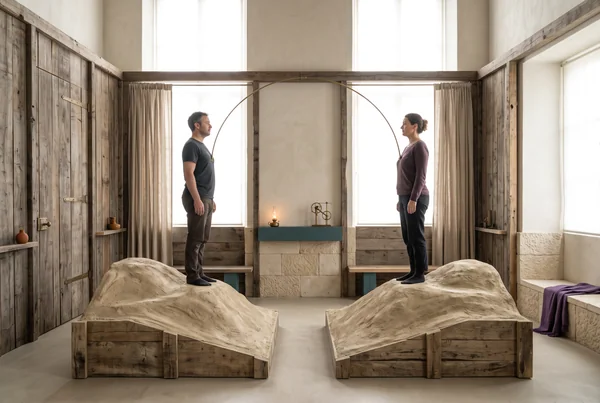 What if hearts reach each other? Since 2008 the Global Coherence Initiative has been listening to the earth's magnetic field at 12 sites worldwide, searching it for traces of collective events. Whether it finds any is hotly contested. We show both sides, honestly.
 - XVI
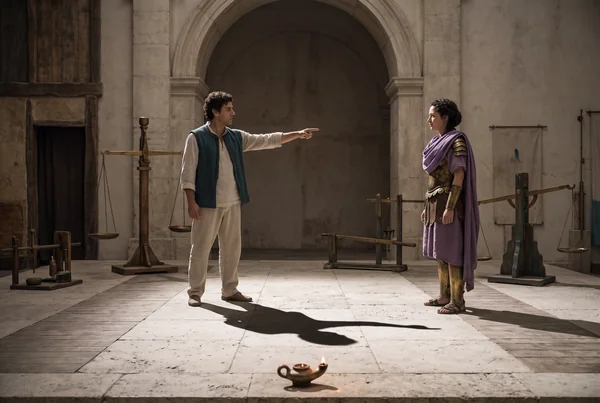 What you most strongly despise in others is often what you have repressed in yourself. Jung called it shadow: everything in yourself you refuse to accept and therefore can barely stand in others. Wilber's 3-2-1 process brings the banished back in three steps. We go along, carefully.
 - XVII
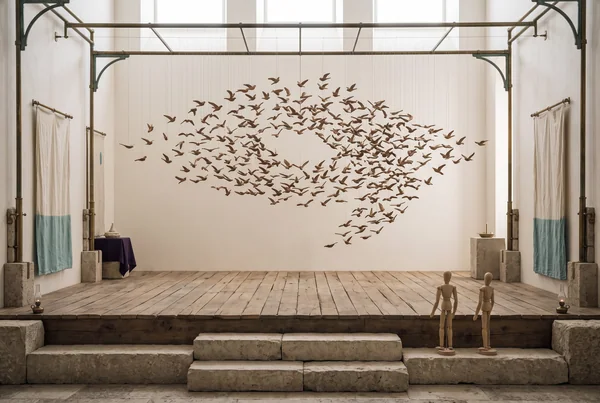 Are fields capable of learning? We do not know. Rupert Sheldrake posited morphic fields: a memory that acts across generations without ever sitting in a gene. An idea with a large explanatory claim and no hard proof. Mainstream biology rejects it. We show both sides.
 - XVIII
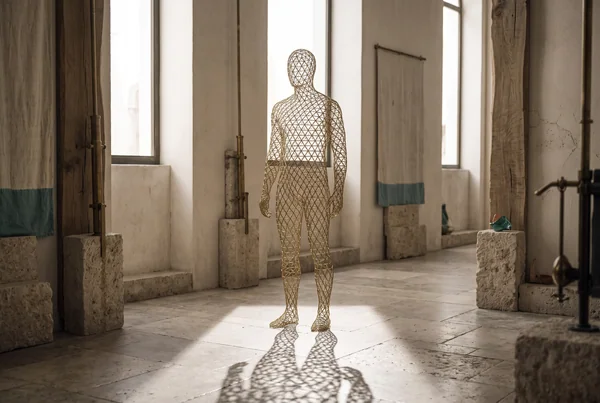 Consciousness as geometry, not as substance. Consciousness: not a substance, not a thing, but a *process* in geometric quantum structure. That is what Penrose and Hameroff claim with Orch-OR (Orchestrated Objective Reduction). It is not proven. But it is the only theory that takes phenomenology seriously.
 - XIX
 Five tools. Sound that works. 200 hertz in the left ear, 210 in the right. The difference sits in the alpha range. Five sound tools, generated right in the browser: no files, no tracking. And what only tradition claims gets called exactly that here.
 - XX
 You have entered the inner cosmos. Here is your map. Two circles overlapping: the Vesica Piscis. From it grows the Flower of Life, from the Flower the star tetrahedron, the Merkaba, laid flat into the plane. Elements ended on the outside, with the Merkaba. Here you end on the inside, with the Inner Mandala.